




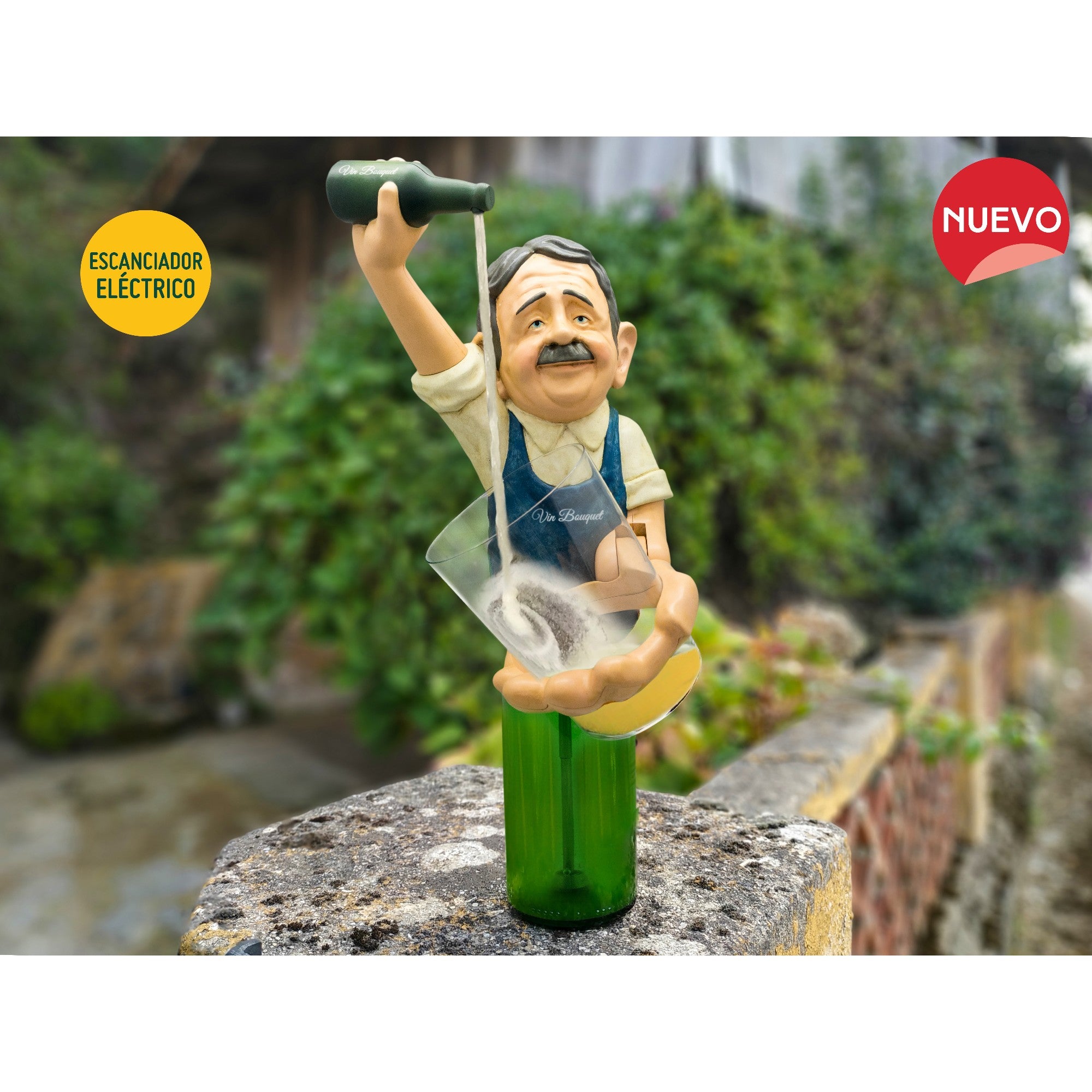
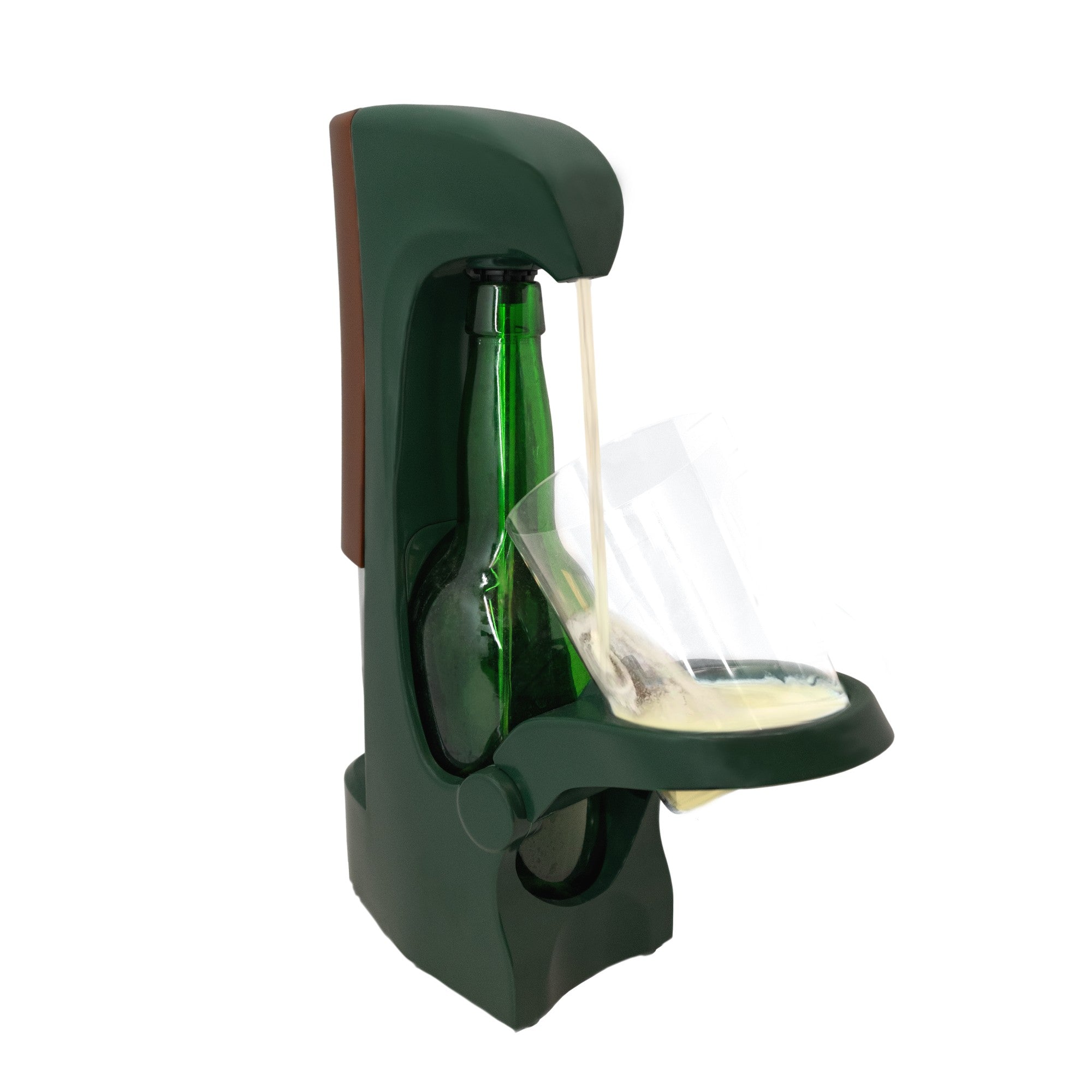
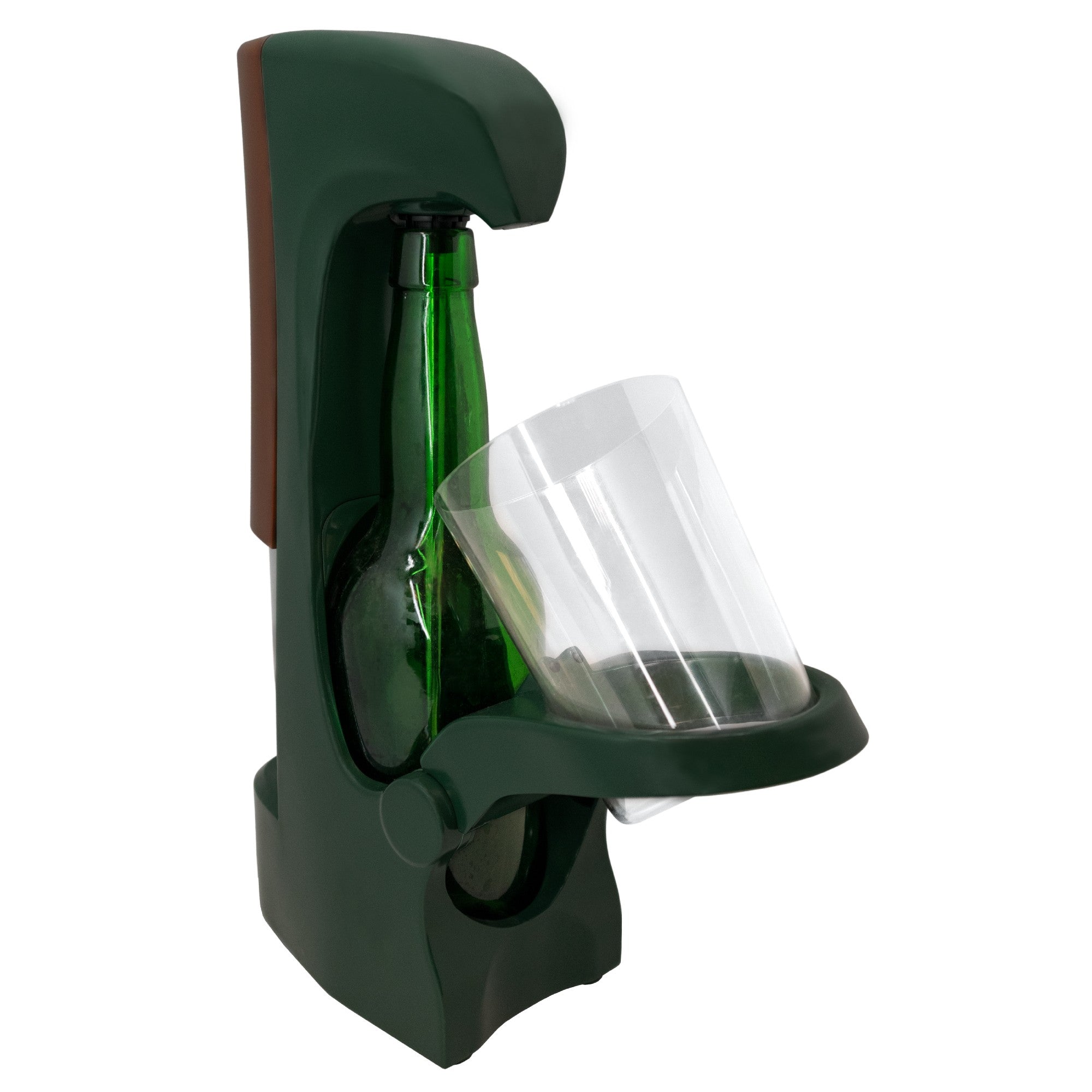

The bottle is in the fridge, the toast is approaching, and the usual doubts arise: is it cold enough yet? How do I open it without the cork popping out and soaking the tablecloth? Which glass should it be served in? And if we don’t finish it, can it be saved for tomorrow? Champagne, cava, prosecco, or any sparkling wine share the same challenge: they are wines with pressure inside the bottle, and that completely changes how they must be chilled, opened, served, and stored compared to still wine.
This guide covers the entire process, step by step, with verified information and no myths disguised as advice: how to prepare the bottle, how to open it safely and controlled (by hand or with an opener), the real serving temperature, how to keep it cold during service, and how to store leftovers without losing bubbles. And at each step, which Vin Bouquet accessory best solves each problem, why, and for which type of user.
❄️ How to properly prepare a bottle of champagne before opening
Before touching the cork, there are a few minutes of preparation that make the difference between a calm uncorking and a scare.
Temperature: the bottle should be cold before handling. A warm sparkling wine generates much more internal pressure, making the opening more abrupt and increasing the risk of the cork popping out suddenly. Below we explain how to chill it quickly and to the exact ideal temperature.
Resting: if the bottle has been moved or shaken just before (for example, taken out of the car or moved from the cupboard to the fridge), it’s best to let it rest for a few minutes without shaking. Movement releases carbon dioxide inside the liquid and temporarily increases pressure.
Exterior drying: dry the bottle well, especially the neck, before opening. Water or condensation can make it slip at the moment of highest pressure, which is when losing control is least desirable.
Removing the capsule and wire cage: remove the metal or plastic foil covering the cork and, with one hand always holding the cork, loosen the wire cage (usually six turns). From this point on, never let go of the bottle or point it towards people, glassware, or ceilings.
Safe position: tilt the bottle about 45 degrees, never vertically, and point the neck away from yourself and others. This reduces the pressure release and makes it easier to control the cork with your hand or the opener.
Common mistakes: shaking the bottle before opening, removing the wire cage without holding the cork, opening it vertically, or forcing the cork by turning the bottle itself instead of turning the cork firmly by hand.
🍾 How to open champagne easily, safely, and in a controlled way
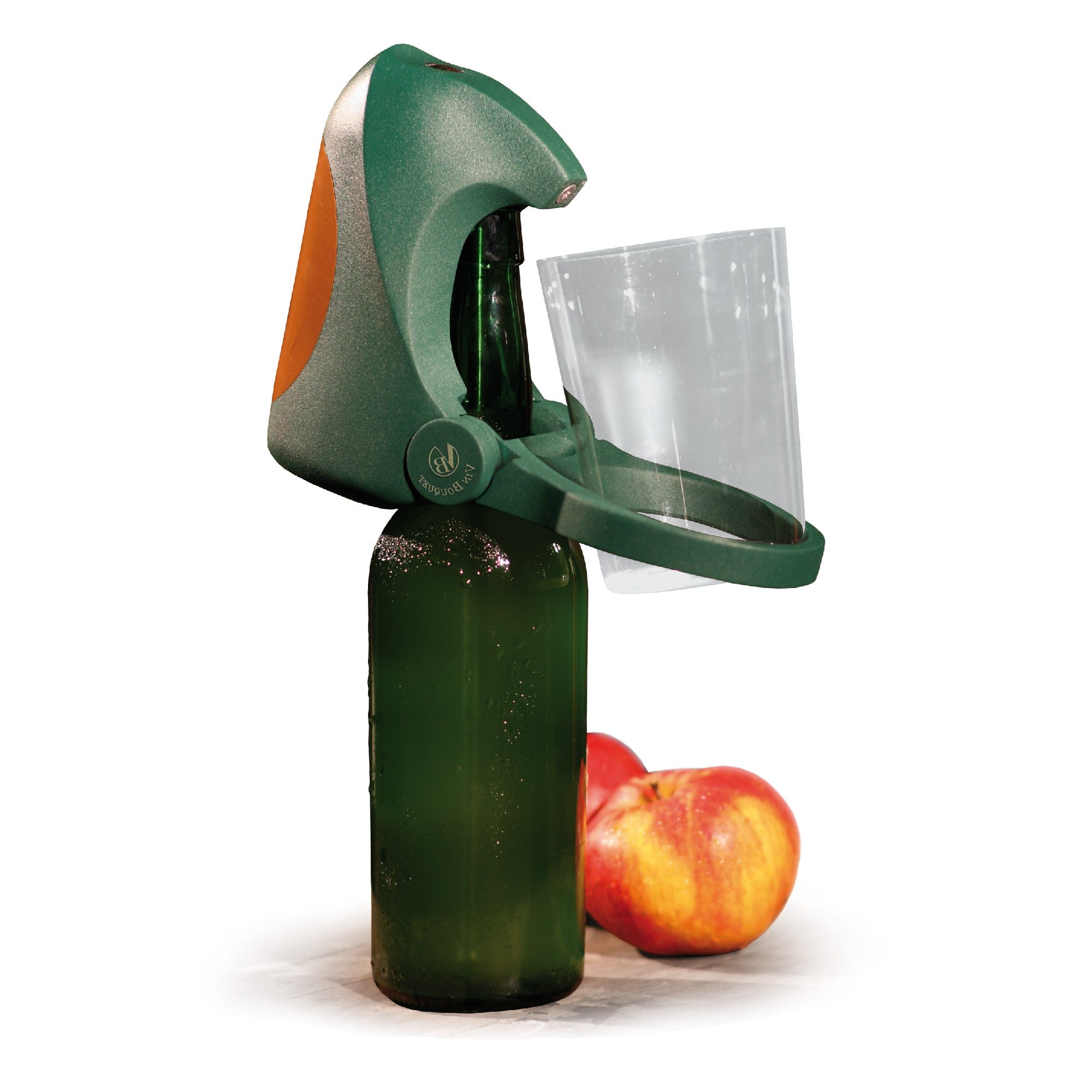
The traditional manual method consists of firmly holding the cork with one hand (never letting go) and slowly turning the base of the bottle with the other, feeling how the cork gradually gives way until it comes out with a soft "sigh" instead of a pop. When done well, it is safe and requires no accessories. The problem arises with very cold or highly pressurized bottles, with hard-to-hold corks, or simply when you are not used to it: that’s when the wrist stiffens the most, you tend to apply too much force, and it’s easier for the cork to get out of control.
To prevent the cork from flying out, the key is to never stop holding it while turning the bottle (not the cork) and to slow its exit with the palm of your hand in the final stretch. To avoid spills, the gas must be released gradually, not all at once: if there is a lot of pressure, stop turning for a second and then resume slowly. That’s why the bottle should not be shaken beforehand or left in the sun: both increase internal pressure without showing it externally. And the cork must be controlled at all times, from removing the foil until it comes out completely; letting go too early is the most common cause of accidents.
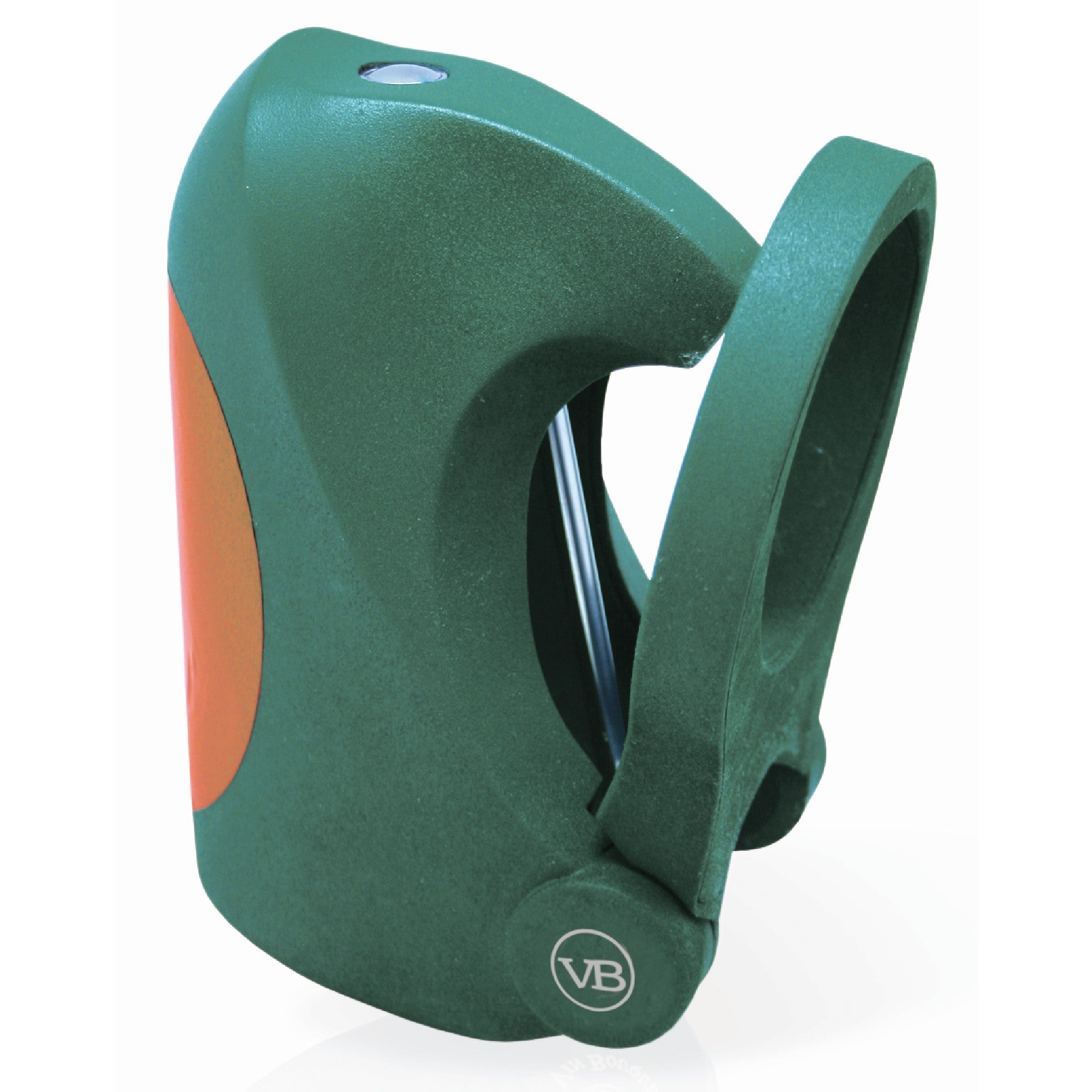
This is where a specific opener is useful: for those who feel insecure holding the cork, don’t want to strain their wrist, or simply want to repeat the same controlled opening every time without relying on skill at the moment.
🏆 What is the best champagne opener?
There is no single "best" opener: it depends on whether you want maximum control with minimum effort, a compact and economical option for the drawer, or to experience the ceremony of sabrage. These are the four Vin Bouquet models, compared without inventing scores not supported by their product sheets.
| Model | Type of opening | Effort level | Cork control | Recommended user | Use | Main advantage | Indicative price |
|---|---|---|---|---|---|---|---|
| FID 1486 — Wooden handle ★ Recommended | Assisted manual, smooth opening | The lowest | High | For those who want the least effort possible and an elegant, smooth opening, daily or as a gift | Everyday | Ergonomic design with wooden handle: the smoothest and easiest opening from the selection, prevents spills and bumps | 25,15 € |
| FID 022 — One Touch | Lever | Low | High | For those who don’t want to risk the cork and prefer a lever system | Everyday | Patented system, extracts the cork with a simple press | 21,66 € |
| FID 1539 — Chromed ★ Best price | Manual with side handles | Medium | Medium-high | For those looking for a compact, economical, and occasional option | Everyday / occasional | Lightweight, compact, and very affordable: the cheapest in the selection | 4,45 € |
| FID 222 — Sabrage saber | Sabrage (traditional technique) | Requires technique | Requires practice | For those who want to turn opening into a show | Ceremonial | 29 cm blade, presented in a wooden box | 49,45 € |
If your priority is the least possible effort when opening, the FID 1486 (assisted and controlled manual opening, the smoothest in the range) is the recommended option; the FID 022 (with its patented lever system) is the alternative if you prefer a lever mechanism instead of assisted manual twisting. The FID 1539 covers the lightest pocket or drawer option. The FID 222 is a different experience, not a substitute for the others.
 Wooden Handle Opener FID 1486
Checking price…
Wooden Handle Opener FID 1486
Checking price…
The smoothest in the range: minimal effort and total cork control.
 Chromed Opener FID 1539
Checking price…
Chromed Opener FID 1539
Checking price…
Lightweight, compact, and the most affordable in the selection.
 One Touch Opener FID 022
Checking price…
One Touch Opener FID 022
Checking price…
Patented lever system, extracts the cork with a simple press.
🥂 FID 1486: a controlled opening for a worry-free enjoyment
Safe opening, step by step
The problem solved by the champagne opener with wooden handle is very specific: the insecurity of holding a pressurized cork without knowing exactly how much force is needed. Its ergonomic design allows you to hold and control the cork throughout the process, without needing to squeeze hard or strain the wrist. The natural wooden handle provides a firm and stable grip even with a cold bottle and some condensation on the hands, and the mechanism guides a smooth opening, without the sharp pop that scares those not used to uncorking.
See the FID 1486 opener →Due to its matte black finish and careful presentation, it is also a common choice as a gift for champagne lovers: it solves a real problem (fear of the cork) with an object that also looks good on a table.
⚔️ Opening champagne with a saber: what is sabrage
Sabrage (or saber opening) is the Napoleonic-origin technique of opening a champagne bottle with a sharp strike using the flat part of a blade or saber, sliding it along the bottle until hitting the lip of the neck (the junction where the thick glass of the neck ends). The strike, along with the bottle’s internal pressure, cleanly breaks off that part along with the cork and the collar, leaving the bottle’s mouth ready to serve.
It is a tradition designed to turn the opening into a visual ceremony, not a daily use method or the easiest option on the list: it requires following the technique precisely, using a cold bottle (the glass cuts cleaner when cold), and striking at the correct angle, not just anywhere on the neck. The FID 222 from Vin Bouquet is a saber with a 29 cm steel blade and an ergonomic handle designed for this technique, presented in its own wooden box.
For safety: stay away from people, glassware, and fragile surfaces, hold the saber firmly, and always follow the manufacturer's instructions before trying it for the first time. It is not a tool to practice with without having seen how to do it correctly first, and it should not be presented—or used—as the easiest or everyday way to open a bottle.
 FID 222 Sabrage Saber
Checking price…
FID 222 Sabrage Saber
Checking price…
29 cm steel blade and wooden box included. For those who want to turn the toast into a memorable moment.
🍷 How to serve champagne correctly
The glass matters more than it seems: a flute or tulip-shaped glass, narrow and elongated, preserves effervescence better and concentrates aromas compared to a wide saucer-type glass, which makes the bubbles disappear much faster.
To serve without creating too much foam, tilt the glass about 45 degrees and pour along the inner wall, not in the center; straighten the glass as it fills. Serve in two stages if there is a lot of foam: a first pour to reduce it and then finish. The right amount is usually about two-thirds of the glass, leaving space for aromas to concentrate and to be able to swirl the glass without spilling.
During service, especially if there are several guests and the bottle takes time to empty, it is best to keep it in a champagne bucket or ice bucket with water and ice rather than leaving it loose on the table: within minutes out of the cold it starts to lose both temperature and some of its effervescence.
🧊 How to chill champagne quickly and keep it cold
The most effective way to chill a bottle of sparkling wine is not the freezer (risk of bursting or uneven cooling) but water with ice, not just dry ice. Water surrounds the entire surface of the glass and transmits cold much more evenly and quickly than ice alone, which leaves air gaps between the cubes. Submerged in an ice bucket or champagne bucket filled with water and ice (about half and half), a bottle reaches its ideal temperature in about 20-30 minutes, compared to the 3-4 hours it takes in the fridge alone. If you want to know how to chill any drink (wine, beer, soft drinks...) quickly and professionally, check out our guide How to chill drinks like a pro.
| Situation | Recommended solution | Why |
|---|---|---|
| Dinner at home, one bottle | Stainless steel ice bucket for 1 bottle (FIE 304) | Gradual cooling with water and ice, without damaging the wine; side handles for serving by tilting from both sides |
| Elegant table, event or celebration | 38 cm stainless steel champagne bucket (FIE 306) + stand (FIA 303) | Greater visual presence, frees up table space with its own foot; designed for events and professional use |
| Terrace or gathering with several bottles | 6-bottle Ice Bucket Cooler (FIE 029) | Made of durable PS, allows cooling several bottles at once for large groups |
| Restaurant, catering, hospitality | Ice Bucket Cooler (various sizes) or stainless steel champagne bucket | Specifically recommended for intensive professional use according to product sheet |
| Picnic, beach, transport, or no access to ice | Cooling gel sleeve or adjustable non-slip sleeve (FIE 001) | Pre-frozen and cool by contact, without relying on ice cubes or water |
| Last-minute express cooling | Small ice bucket for 1-2 bottles with very cold water and plenty of ice | The volume of water/ice relative to the bottle determines the cooling speed |
About the FIE 304 with its FIA 303 stand: it is the most elegant combination in the selection for those seeking presence on the table — the stainless steel foot keeps the ice bucket at the ideal height without taking up space on the tablecloth, designed for dinners and special events. It is advisable to check the availability of the stand before purchase, as it sometimes sells out due to its stainless steel manufacturing.
 1 Bottle Stainless Steel Ice Bucket
Checking price…
1 Bottle Stainless Steel Ice Bucket
Checking price…
Gradual cooling with water and ice, two side knobs to tilt the bottle when serving. Compatible with the FIA 303 stand.
 38 cm Stainless Steel Champagne Bucket
Checking price…
38 cm Stainless Steel Champagne Bucket
Checking price…
Greater capacity and presence. Cools several bottles at once, ideal for celebrations and professional use.
 FIA 303 Ice Bucket Stand
Checking price…
FIA 303 Ice Bucket Stand
Checking price…
Stainless steel foot for the FIE 304. Frees up table space. Check availability before purchasing.
 Ice Bucket Cooler
Checking price…
Ice Bucket Cooler
Checking price…
From 1 to 6 bottles, in transparent, black, or white. The option for groups, terraces, and hospitality.
At what temperature is champagne served?
There isn’t a single temperature for all sparkling wines: a young cava is served colder (about 5-8°C) than a more aged cava (8-10°C), and champagne is usually served slightly warmer than cava, around 10-12°C. The ideal temperature is always below 12°C, but serving it too cold is also a mistake: below 4-5°C (the usual fridge temperature) extreme cold numbs the taste buds and reduces aroma perception, flattening the flavor. The goal isn’t “as cold as possible,” but the temperature that maintains effervescence without dulling the aroma.
🧴 How to preserve opened champagne without losing bubbles
Not just any stopper works. A normal wine stopper doesn’t fit hermetically on the neck of a sparkling wine bottle nor withstand the residual pressure inside, so the gas still escapes and the bubbles are lost within a few hours. A specific stopper for cava and champagne is designed to seal that particular neck (wider and with a different rim than a still wine bottle) and, in models with vacuum system, to expel some air by removing pressure in the opposite direction, slowing gas loss.
Seal with sound indicator
The cava preserving stopper with sound indicator is placed on the neck and operated by pumping the top; a patented system emits an audible click at the exact moment the correct vacuum is reached, so there’s no guesswork about whether the seal is properly made. This sound prevents the most common problem with manual stoppers: not knowing if it’s really sealed or if air is still slowly entering. It helps stop three problems at once: pressure loss (and with it the bubbles), wine oxidation, and aroma loss due to air contact with the liquid.
See the stopper with indicator →Comparison between the different available preservation levels:
| Type of stopper | How it works | What it solves | Models |
|---|---|---|---|
| Hermetic stopper with clamp/manual pump | Mechanical closure or manual pump that seals the neck | Prevents oxidation and keeps the gas longer | FIT 008, FIT 1171 |
| Stopper with time marker | Hermetic seal + wheel or indicator to note when it was closed | Freshness control as well as preservation | FIT 1159 |
| Stopper with integrated vacuum system | Manual vacuum that removes air pressure inside the bottle | Better prevents bubble loss and oxidation | FIT 006 |
| System with sealing indicator (patented) | Manual vacuum with audible click confirming correct seal | Eliminates uncertainty: you know for sure it is properly closed | FIC 1179 / FIC 1188 |
 Stopper with Indicator (Black/Silver)
Checking price…
Stopper with Indicator (Black/Silver)
Checking price…
Patented system with audible click confirming perfect vacuum. Available in black (FIC 1188) and silver (FIC 1179).
 Stopper with Integrated Vacuum
Checking price…
Stopper with Integrated Vacuum
Checking price…
Vacuum system with its own sound indicator. Available in burgundy or gray (sent assorted).
 Stopper with Time Marker
Checking price…
Stopper with Time Marker
Checking price…
Airtight seal and integrated marker to track how long the bottle has been open.
 Metal Stopper with Clamp
Checking price…
Metal Stopper with Clamp
Checking price…
Airtight seal with manual pump and sturdy metal clamp. Robust and durable design.
Quick questions about preserving opened champagne
Can opened champagne be stored? Yes, as long as it is sealed with a stopper specific for sparkling wines and kept cold.
Should it be stored in the fridge? Yes, cold slows both gas loss and oxidation; at room temperature, both processes happen faster.
Upright or horizontal position? Upright. This reduces the surface area of liquid in contact with the air inside the bottle, which slows the gas exchange compared to laying it down.
Why do the bubbles disappear? Because the dissolved gas (carbon dioxide) escapes into the air as soon as it loses the pressure that kept it trapped in the liquid; an airtight seal is the only thing that truly prevents this escape.
How long can it be preserved? With a good airtight stopper, kept cold and upright, it usually maintains a pleasant effervescence for 24-48 hours; after that time, the bubbles reduce significantly, although the taste can still be enjoyable. There is no exact official figure, so treat this as a guideline, not a guarantee.
What type of stopper is most suitable? The more sealing control it offers (integrated vacuum, ideally with an indicator confirming the closure), the better it will preserve the effervescence compared to a simple stopper.
Does a spoon inside the bottle neck work? It is a widely spread popular trick, but it has no real physical basis: the spoon does not create any seal or retain pressure. Champagne stored this way loses bubbles just as without it. If you don’t have a stopper handy, it’s better to keep the bottle well chilled and drink it as soon as possible, without relying on the spoon as a preservation method.
🎁 Which champagne accessories to choose according to user type
| Profile | Recommendation |
|---|---|
| Who wants to open with minimal effort | Wooden handle opener FID 1486, the smoothest opening in the range |
| Who fears the cork popping out | Wooden handle opener FID 1486, full cork control |
| Who prefers a lever system | One Touch opener FID 022 (lever, patented system) |
| Who is looking for the lowest price | Chrome opener FID 1539 — the most affordable in the range, from €4.45 |
| Who is looking for a premium gift | FID 1486 (by design) or the saber FID 222 in its wooden box |
| Who enjoys the sabrage ritual | Saber FID 222 |
| Who usually leaves part of the bottle | Stopper with sound indicator FIC 1179/1188, or FIT 006 with integrated vacuum |
| Who organizes celebrations with guests | Champanera FIE 306 (+ stand FIA 303) for table presence |
| For those who need to keep several bottles cold | Ice Bucket Cooler FIE 029 (up to 6 bottles) |
| Restaurants, catering, and hospitality | Ice bucket or stainless steel champagne cooler, both marked for professional use on their product page |
🥂 The complete ritual to enjoy champagne
Five steps, one goal: to enjoy every bottle at its best, from start to finish. And if besides sparkling wine you want to take care of still wine this summer, don’t miss our guide Chill, open, decant, and preserve: the complete ritual to enjoy wine this summer.
- Chill properly: water and ice, not just ice, in a bucket or champagne cooler; 20-30 minutes and ready.
- Open in a controlled way: always hold the cork, bottle at 45°, no shaking or forcing; or use a specific opener if you prefer not to rely on your wrist.
- Serve without losing temperature: flute or tulip glass, pour along the side, bottle back in the bucket between servings.
- Preserve what’s left: specific stopper for sparkling wines, kept cold and upright as soon as possible after the last toast.
- Enjoy it again in good condition: within 24-48 hours, with the bubbles and flavor still at their best.
Make every toast perfect, from start to finish.
Openers, champagne buckets, ice buckets, and preserving stoppers: everything you need to chill, open, serve, and preserve champagne and cava, all in one place.
See champagne and cava accessories →❓ Frequently Asked Questions
How to open a champagne bottle without the cork popping out?
Without shaking the bottle, keep it cold, tilted at 45° and pointing away from people and objects. Always hold the cork with one hand and slowly twist the base of the bottle (not the cork) until it releases on its own. A specific opener like the FID 1486 or the FID 022 helps maintain control without relying solely on your wrist.
What is the best champagne opener to use at home?
The two best options in the range are the FID 1486, if you prioritize minimal effort and the smoothest, most controlled opening, and the FID 1539, if you prioritize price: it is the most economical in the selection, from €4.45. The FID 022 (patented lever system) is a mid-range alternative for those who prefer that mechanism.
What is the cheapest champagne opener?
The chrome FID 1539, from €4.45, is the most economical option in the Vin Bouquet selection: lightweight, compact, and perfect to have a spare without spending much.
What is the difference between a champagne opener and a corkscrew?
A traditional corkscrew is designed to extract a straight cork from a still wine, without internal pressure. A champagne or cava opener is designed to control a cork pushed out by gas pressure, holding and guiding its exit instead of "pulling" it.
How to open cava without using force?
Cava is opened exactly like champagne: holding the cork and slowly twisting the bottle. The wooden-handled opener FID 1486 minimizes the effort needed; a lever opener, like the FID 022, is another effortless alternative.
How do you use a champagne opener?
It is placed over the cork without the cage, firmly holding the body of the opener against the bottle, and activated (by lever or twist, depending on the model) until the cork comes out in a controlled way, without needing to pull it directly with your fingers.
What is sabrage?
It is the traditional technique, of Napoleonic origin, of opening a bottle of champagne by sliding the flat part of a saber along the neck until it hits the lip of the collar, cleanly popping off that piece along with the cork. It is more of a ceremony than an everyday method and requires careful technique.
At what temperature should champagne be served?
Around 10-12°C; young cava is served slightly colder (5-8°C) and cava with more aging slightly less cold (8-10°C). Serving it below 4-5°C reduces aroma perception.
How to quickly chill a bottle of champagne?
By submerging it in an ice bucket or champagne bucket with equal parts water and ice, not just ice. It reaches serving temperature in 20-30 minutes, compared to the 3-4 hours it takes just in the fridge.
What do you put inside a champagne bucket?
Cold water and ice, roughly in equal parts. Water transmits cold evenly across the entire surface of the bottle; ice alone leaves air gaps that cool unevenly and more slowly.
How to preserve an opened bottle of champagne?
With a specific stopper for cava or champagne (not a normal wine stopper), stored in the fridge and upright, as soon as possible after serving the last glass.
How long does opened champagne last in the fridge?
With a good airtight stopper, kept cold and upright, it usually maintains pleasant bubbles for between 24 and 48 hours. There is no official guaranteed figure; after that time, the gas reduces noticeably although the flavor may still be good.
Which stopper preserves bubbles best?
Those that incorporate a vacuum system, especially those with an indicator confirming a proper seal (like the FIC 1179/1188 with its patented sound click), as they eliminate doubt about whether the closure is properly done.
Is a normal wine stopper suitable for champagne?
Not effectively: the neck of a sparkling wine bottle has a different shape and retains residual pressure inside that a conventional wine stopper is not designed to hold. A specific stopper for cava/champagne is needed.
Does the spoon trick work to preserve champagne?
It is a widespread myth without any real physical basis: the spoon does not create any seal nor retain pressure, so the bubbles are lost just as without it. A specific stopper is the only solution with real backing.


