





Frying pans and saucepans: how to choose without confusion
Non-stick, stainless steel, or ceramic; with or without induction; what size you really need. Here’s everything you need to know before buying — and the pieces that work best in an everyday kitchen.
🍳 Not sure which pan suits you?
Titanium-reinforced coating: nothing sticks, you clean with a quick rinse, and cook with very little oil. The most convenient option for everyday use.
Super resistant, doesn’t scratch with metal utensils, and withstands high temperatures. Ideal for browning meats and intense sautés.
PFOA-free, even and gentle cooking, easy to clean. A good choice for light and healthy cooking.
All pieces in this guide have a base compatible with induction, ceramic, gas, and electric cooktops — cook with whatever you have at home.
🔬 The fine print: why some cost more than others
No marketing here, just technical data. This way you can see exactly what you pay extra for when choosing one pan over another.
🏭 Cast aluminum vs forged aluminum
Cast: liquid aluminum is poured into a mold and solidifies as a single piece, without welds. It is the most premium option: thick walls, undeformable even after years of use and sudden temperature changes, and excellent heat distribution for even cooking. It is the most expensive production process, so it is usually reserved for the highest quality ranges.
Forged: starts from an aluminum disc that is pressed (hot, unlike cold stamping) into the shape of a pan. It is lighter and cheaper to produce than cast, with a good quality-price ratio, though it doesn’t reach the same resistance to deformation or wall thickness as a cast piece.
In this collection: the Quantanium line’s frying pans, saucepans, grill pan, and griddle are made from high-quality cast aluminum — the durable, premium option, not the budget one. The stainless steel pan and pot do not use aluminum: they are stainless steel (the pan has a three-layer steel-aluminum-steel construction).
🎯 Quantanium (PPG) vs ceramic (ILAG Xeradur® 2)
The two non-stick families in this guide are not the same product with different names — they are distinct technologies, with different technical sheets and manufacturing costs.
| Feature | Quantanium® (PPG) | Xeradur® 2 Ceramic (ILAG) |
|---|---|---|
| Technology | PTFE reinforced with titanium particles | Sol-gel ceramic, PTFE-free |
| Structure | 3-layer system (primer + middle layer + finishing layer) | 2-layer system (reinforced base layer + top layer with metallic effect) |
| Total thickness | 30–40 microns | 35–50 microns |
| Abrasion resistance (cycles) | 15,000–25,000 cycles | Not published by cycles; qualitative rating "good" |
| Metal utensils | Yes, tolerates moderate use | Not recommended (wood or silicone) |
| Dishwasher | Yes | Tolerates, but ILAG recommends hand washing to extend its life |
| Max. usage temperature | Up to 260 °C in continuous use | 250 °C recommended (material stability up to 400 °C, not as cooking temperature) |
| Release test (egg) | "Release" cycles 10,000–25,000 | Egg release test up to 300 °C |
| Substrates compatible with the technology | Rolled, forged, cast, and anodized aluminum; stainless steel | Pressed/forged aluminum, cast aluminum, and stainless steel |
| Free of | PFOA | PTFE; developed without intentional use of PFAS |
In practice: Quantanium is a thicker system with more reinforcement layers, designed to withstand metal utensils, frequent dishwasher use, and years of intensive use — that’s why it’s the choice for the entire line of frying pans, saucepans, grills, and griddles in this guide. Ceramic relies on PTFE-free technology with good non-stick effect for daily use, in exchange for somewhat more delicate care (no metal utensils, better hand washing). Both technologies can be applied, according to the manufacturer, on cast, forged, or pressed aluminum and on stainless steel — the choice of the body (cast in the case of the Nerthus range) is a separate decision from the coating.
Sources: PPG QuanTanium® technical sheet (Consumer Cookware, PTFE/Spray) and ILAG Xeradur® 2 technical sheets (Ceramic Non-Stick, sol-gel technology). Coating data; do not replace the conformity declaration of each finished product.
🔥 Frying pans, saucepans, and pots — one by one


📊 Which one do I choose? Quick comparison
| Product | Material | Induction | Sizes | Ideal for |
|---|---|---|---|---|
| Quantanium Pan | Cast aluminum + titanium | Yes | 18–26 cm | Daily use, eggs, stir-fries |
| Ceramic Pan | Non-stick ceramic | Yes | 20–30 cm | Light and healthy cooking |
| 3-Layer Stainless Steel Pan | Stainless steel | Yes | 20–28 cm | Browning meat, high heat |
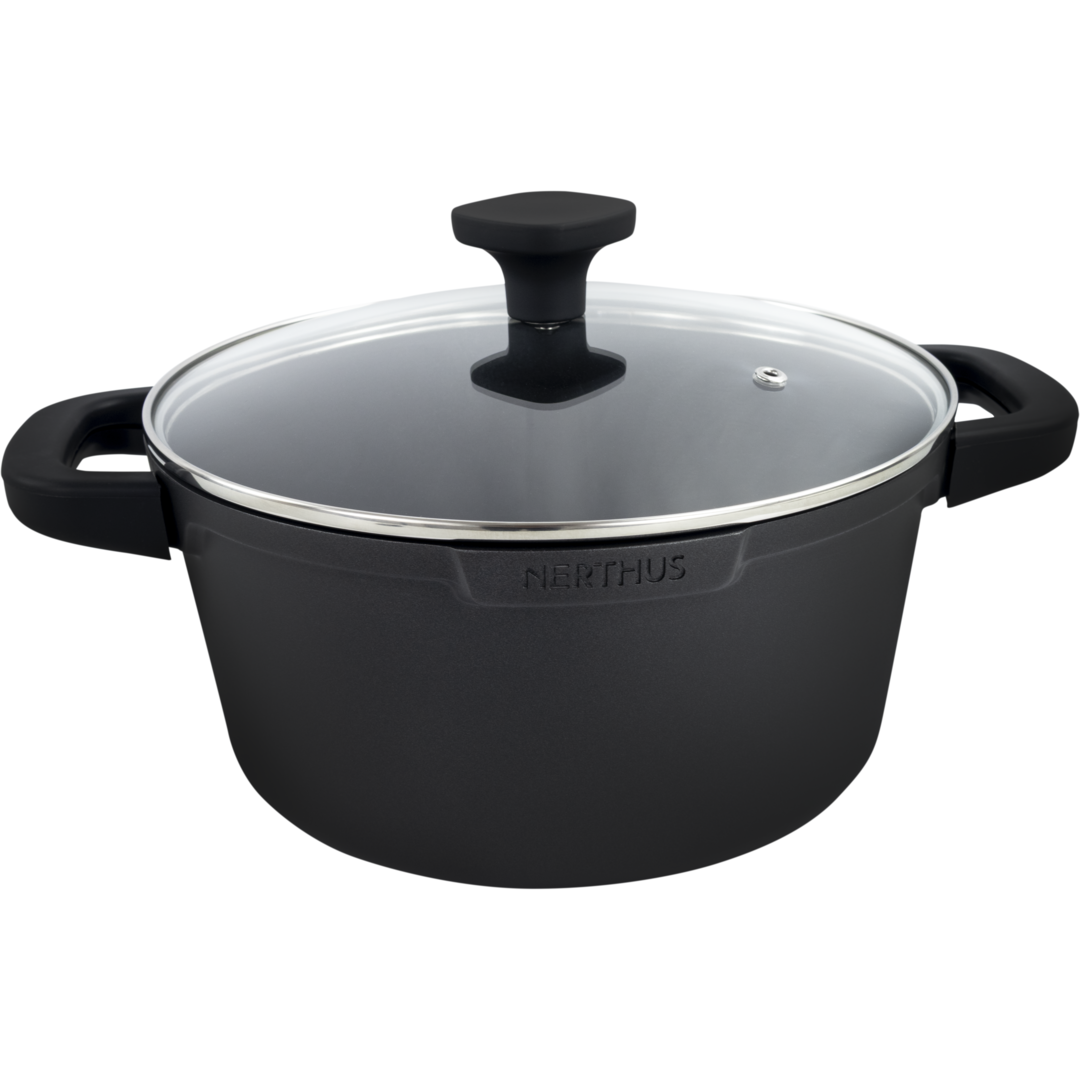
| High Casserole | Cast aluminum + titanium | Yes | 20–28 cm | Sauces, pasta, rice |
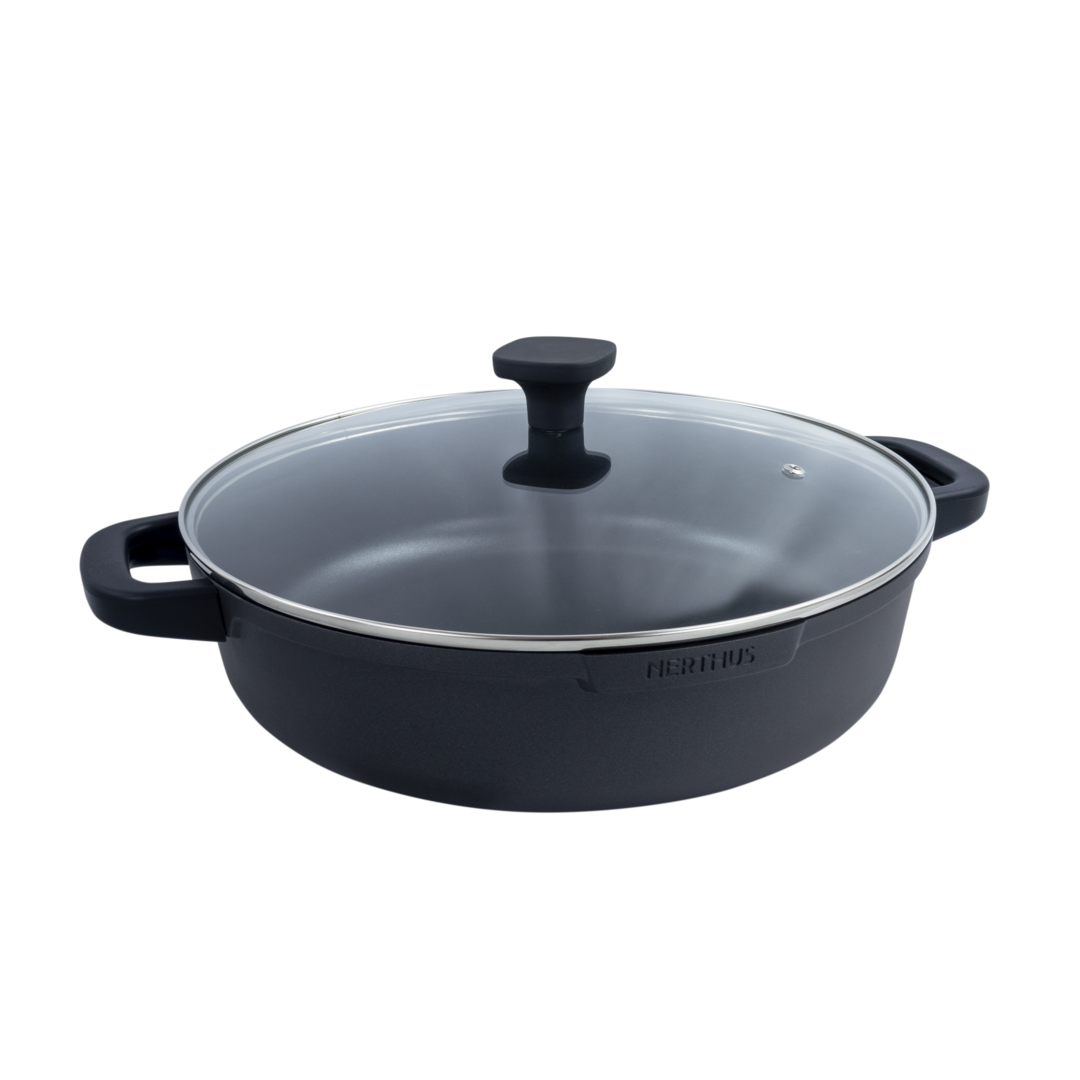
| Low Casserole | Cast aluminum + titanium | Yes | 24–32 cm | Stews, large sautés |
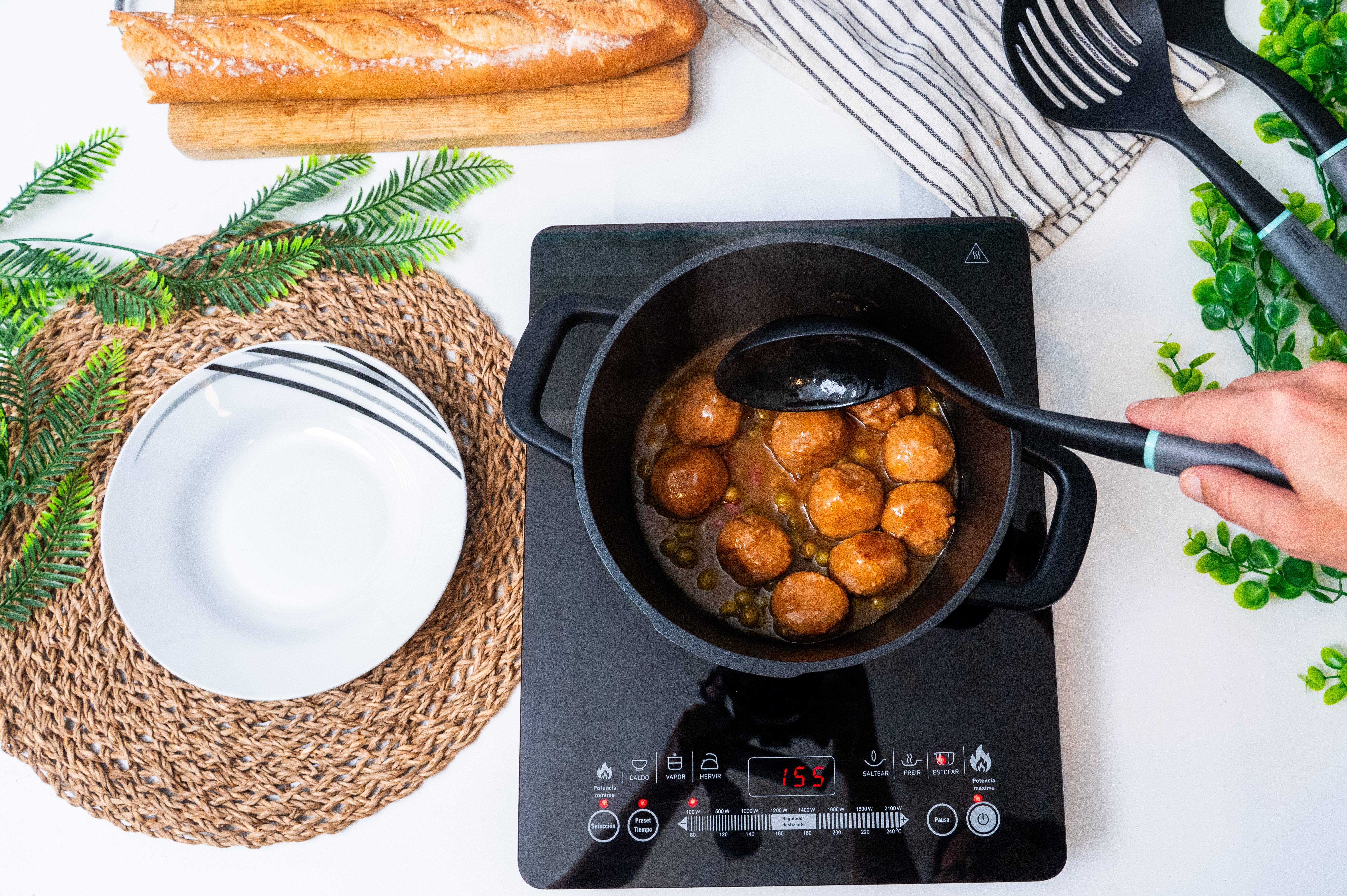
| Pressure Cooker | Stainless steel | Yes | 6 L | Legumes and quick stews |
🧺 Quantanium Sets — complete cookware set
If you’re going to equip the entire kitchen, it’s more cost-effective to get the pack. All with reinforced Quantanium non-stick coating with titanium.


🔥 For outdoors and barbecue
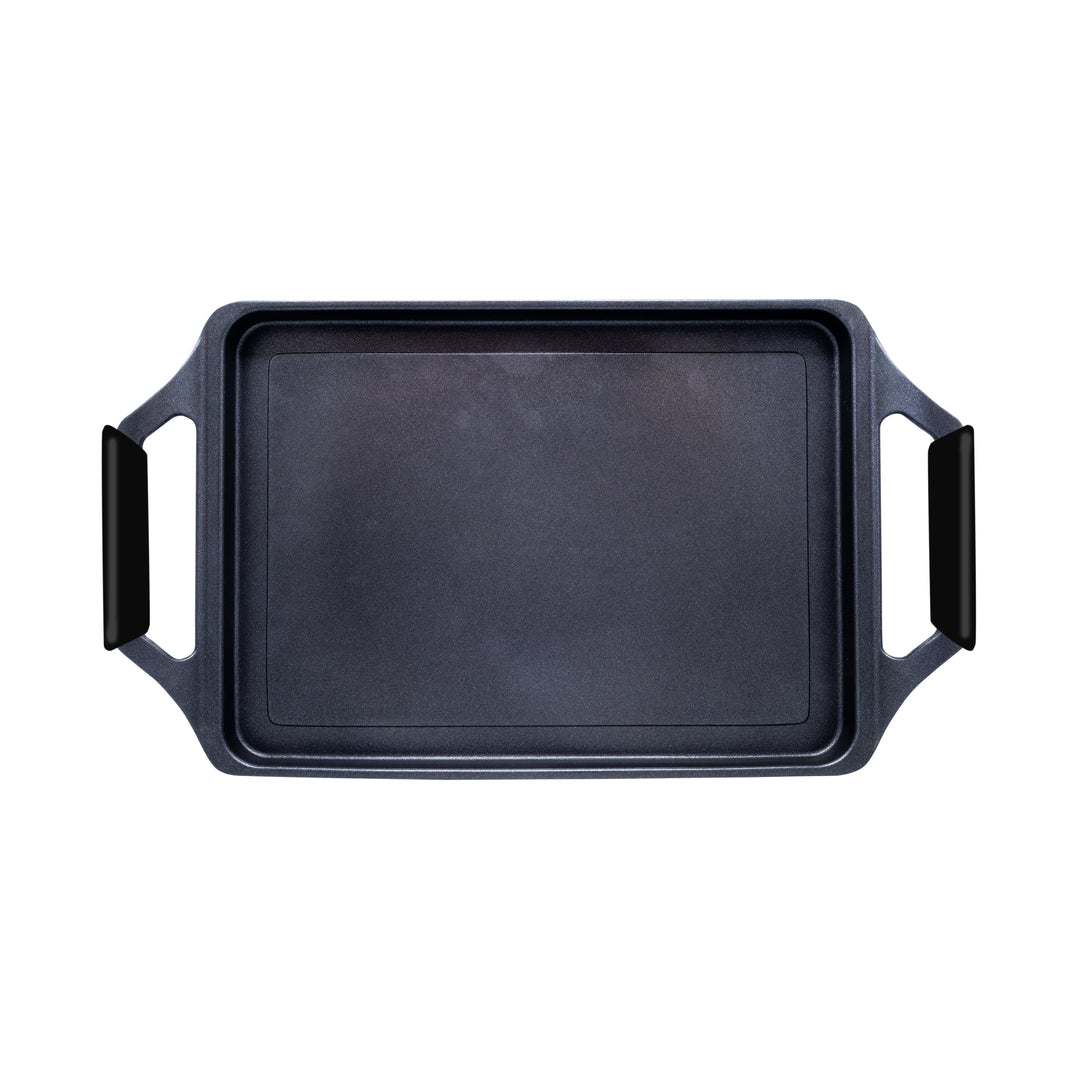
Same Quantanium non-stick, designed for griddle, grill, and outdoor gatherings.


❓ Frequently Asked Questions
Non-stick or stainless steel, which is better?
It depends on use: Quantanium non-stick is more convenient for everyday cooking (eggs, stir-fries, little oil) and easier to clean. Stainless steel withstands high heat and metal utensils better, ideal for browning meat. Many kitchens combine both. If you choose stainless steel, in our guide on how to use it without food sticking you have the complete step-by-step.
How do I care for a non-stick pan to make it last?
Use wooden or silicone utensils (never metal), avoid continuous high heat as much as possible, and although dishwasher safe, washing by hand greatly extends its life.
What size pan do I need?
For 1–2 people, 20–22 cm. For 3–4 people, 24–26 cm. For cooking in quantity or for groups, 28 cm or more. Saucepan sizes follow the same logic depending on how many dishes you want to cook at once.
Are all suitable for induction?
Yes, all products in this guide have a base compatible with induction, ceramic, gas, and electric cooktops.
Is it worth buying a set instead of individual pieces?
If you need to equip the entire kitchen, yes: Quantanium Sets are more economical per piece than buying them individually. If you only need a specific pan, it’s better to buy it individually.
Cast or forged aluminum, which is better?
Casting is the high-end option: it is poured into a mold in one piece, remains deformation-free over time, and distributes heat very evenly, but it is more expensive to produce. Forging is lighter and more economical, offering good value for money, although it does not match the deformation resistance of casting. The Quantanium pieces in this guide use high-quality cast aluminum, the premium option.
Why does Quantanium cost more than a basic ceramic pan?
Because they are different systems: Quantanium is a 3-layer coating reinforced with titanium, designed to withstand metal utensils and thousands of use cycles; ceramic is a 2-layer system without PTFE, with very good non-stick properties but more delicate care. More layers, more resistance, and more durability tests translate into a higher manufacturing cost.
Choose yours and cook today
Add to cart without leaving this item — the cart opens and you can keep reading.
🛒 Go to the collection


